
The breath has a language. This book teaches you to hear it.
Most teachers are taught to teach postures. Teaching Breathwork teaches you to listen first: to the breath, to the vayus, the subtle intelligence that lives inside every inhale and exhale. When you understand that intelligence, everything about your teaching changes.
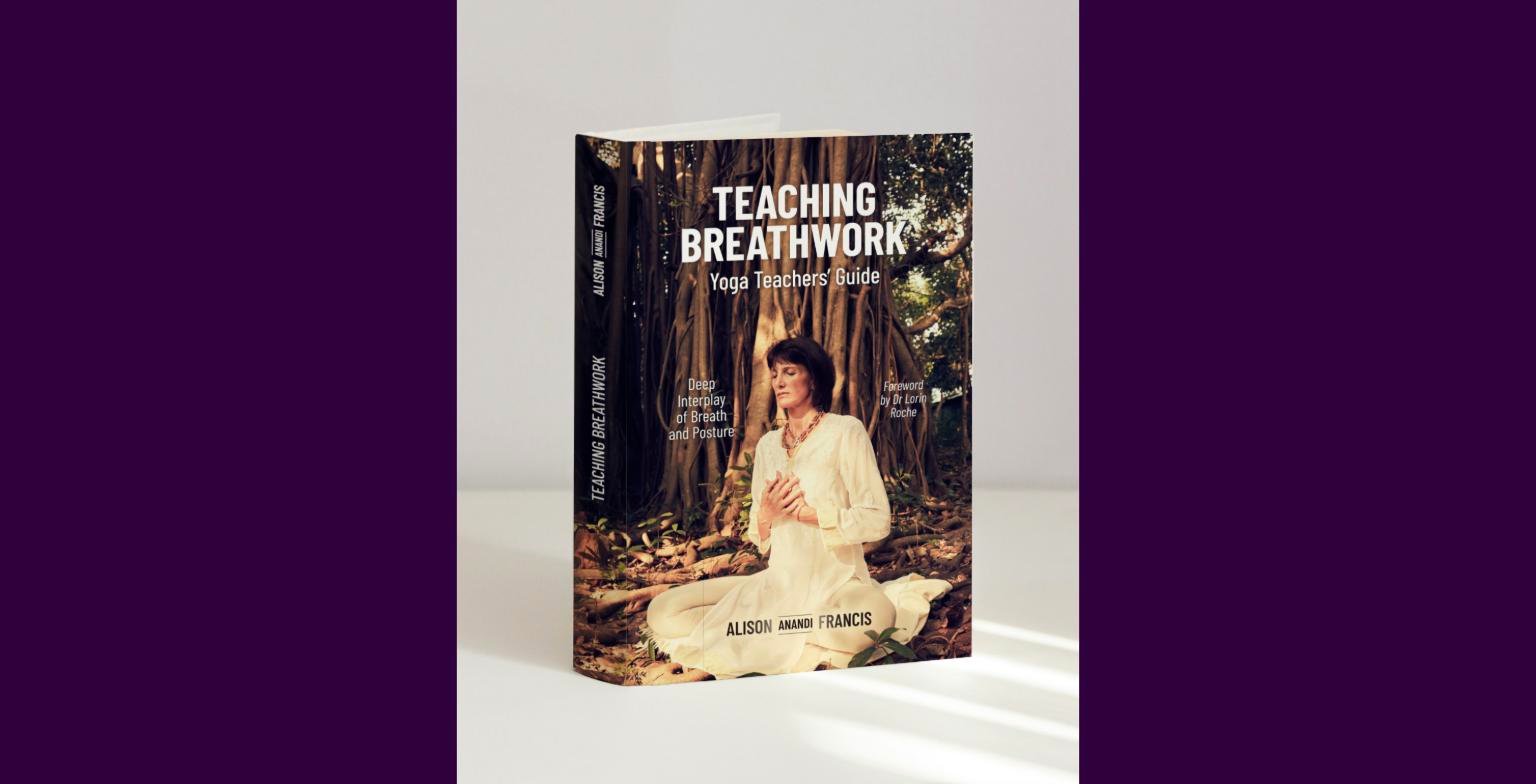
Why I wrote it
I have taught breath for twenty years: as a Senior Akhanda Yoga teacher and teacher trainer, as a Master Breathwork Facilitator, and through 800 hours of yoga philosophy with the late Georg Feuerstein. In that time I have watched the same thing happen in room after room. When a teacher works from the breath rather than the shape, the class changes. The body softens before the posture does. Students stop performing and start listening.
What the book explores
India’s love affair with the breath.
The ancient roots of breathwork: why the Indian traditions placed the breath at the centre of all inner practice, and what that wisdom means for teachers now.
The subtle energy of the vayus.
The five vayus: the subtle winds that govern movement, stability and the full expression of any posture.
Timeless wisdom, practical application.
The Hatha Yoga Pradipika, the Yoga Sutras of Patanjali and the Bhagavad Gita, not as theory but as living guidance for breath-centred teaching.
It’s not the posture that holds paramount importance. It’s the spaciousness cultivated by attuning to each vayu within the body. That spaciousness is what allows the complete expression of any posture.
This book is for you if
- You are a yoga teacher who wants to go beyond physical instruction
- You sense there is something deeper in the breath but haven’t found language for it
- You want to bring more depth, stillness and precision into your classes
- You are a practitioner ready to experience postures from the inside out
- You are drawn to the ancient teachings and want to understand them in practice
With a foreword by Dr Lorin Roche
The foreword is written by Dr Lorin Roche, translator of the Vijnana Bhairava Tantra, the classical text on the breath as a doorway to stillness.
The same breath
In my one-to-one work I come to the breath through physiology: it is the most direct way into the nervous system. In this book I come to it through the tradition: the breath as prana, moving through the subtle body. It is the same breath. Teachers who understand both teach from a deeper place.
Teaching Breathwork
In paperback and Kindle editions.
Also by Alison: Breathe Better, Sleep Better